
Let’s Start Here: On Attachment, Survival Strategies, and Becoming
3/03/26



The Gist (aka: TL;DR:)
Welcome to the blog! InnerWoven Collective is a trauma-informed therapy practice in Arizona specializing in attachment-based therapy, EMDR, and Ketamine Assisted Psychotherapy. This post is my introduction (Hi! I’m Keira- owner of InnerWoven), explains how survival strategies form, why insight alone doesn’t create change, and how healing becomes embodied and sustainable.
A Few Words to Begin: Attachment, the Nervous System, and the Patterns We Carry
If you’ve found your way here, welcome! I don’t believe it’s happenstance that you landed on my blog. Chances are, if you’re reading this, you’ve seen yourself in the pages of my website, the words on my social media, or a podcast episode that hit just the right way. No matter how you got here, I’m genuinely glad you did.
This blog is a place for thoughts I’m carrying, patterns I’m noticing (in both my personal life and clinical practice), and conversations that feel worth slowing down for. You’ll find mental health education, reflections on themes that show up again and again in my work, notes from workshops and groups, updates about new offerings, and sometimes ideas that aren’t fully finished yet — but are alive enough to be shared.
What this won’t be is a high-volume content machine. Don’t expect weekly posts. I’m running a business, have a full personal life, and I care far more about writing something thoughtfully than producing content on a schedule that looks impressive. You can expect consistency, though. At minimum, I’ll be publishing two posts per month. That pace allows me to prioritize depth over output, and to write in a way that actually feels sustainable.
Will that hurt my algorithm? Maybe.
But in a world that idolizes producing at an AI pace, it matters to me that this space still feels human.
A Little About Me
I’m Keira 👋 — an Arizona state board licensed professional counselor (LPC), and the founder of InnerWoven. I work with people who are often exhausted from holding everything together; people who function well on the outside but carry patterns inside that feel heavy, confusing, or persistent.
People come to therapy for all kinds of reasons. Some in crisis, some with clarity but no direction, and some carrying hurt they’ve been turning over for years (or even generations). What I tend to notice isn’t a diagnosis or a label, but a shared experience: people trying to make sense of their inner world while still showing up outwardly in all the different ways they’ve stretched themselves. What they’re carrying is relational, embodied, and often shaped long before insight was possible, which is why insight alone never feels like enough.
My role isn’t to fix or direct. It’s to help people understand why certain emotional and relational patterns formed, how the nervous system learned to adapt, and what becomes possible when safety, awareness, and choice start to replace survival.
The Work I Do
At the heart of my work is a belief that healing doesn’t happen in the mind alone, it happens in the nervous system, in the body, and in relationships. Symptoms are not isolated thoughts; they’re messages carrying survival stories that live in the body. My approach is holistic and trauma-informed, integrating attachment theory, parasympathetic nervous-system work, and psychosomatic understanding, because people weren’t meant to experience life in fragments. We were meant to live in conscious awareness of our wholeness.
EMDR Therapy and Intensives
EMDR therapy is a core part of my clinical practice because it supports healing where experiences are stored, in the midbrain and the body, not just in conscious thought. I’m especially drawn to extended 90-minute EMDR sessions because they provide a longer runway, giving people enough time and space to feel safe, engage fully, and go deep.
In a 90-minute session, we can often move through the equivalent of multiple traditional 50-minute sessions simply because we aren’t repeatedly starting and stopping the processing. When EMDR work is fragmented by time constraints, it can feel clunky or prolonged. I’ve also seen it increase subtle resistance, not because someone doesn’t want to heal, but because opening and closing trauma processing over and over takes a lot of energy.
There’s already enough bravery required to begin this work. When there’s adequate time and containment, people tend to access deeper material more fluidly and experience meaningful shifts with greater continuity.
Ketamine-Assisted Psychotherapy
For some, insight and therapy don’t quite cut it when it comes to entrenched survival responses. If you’ve done talk therapy and can’t seem to make the progress you’re longing or, Ketamine-assisted psychotherapy (KAP) can be a powerful option. Ketamine isn’t a shortcut, it’s a therapeutic tool that can soften mental or emotional blocks, creating access to material that’s otherwise hard to reach. Ketamine works in the brain to creates new neuropathways, making it easier to establish new patterns and ditch the old.
My role in this work is grounding, guiding, and helping translate what emerges into lasting, embodied change.
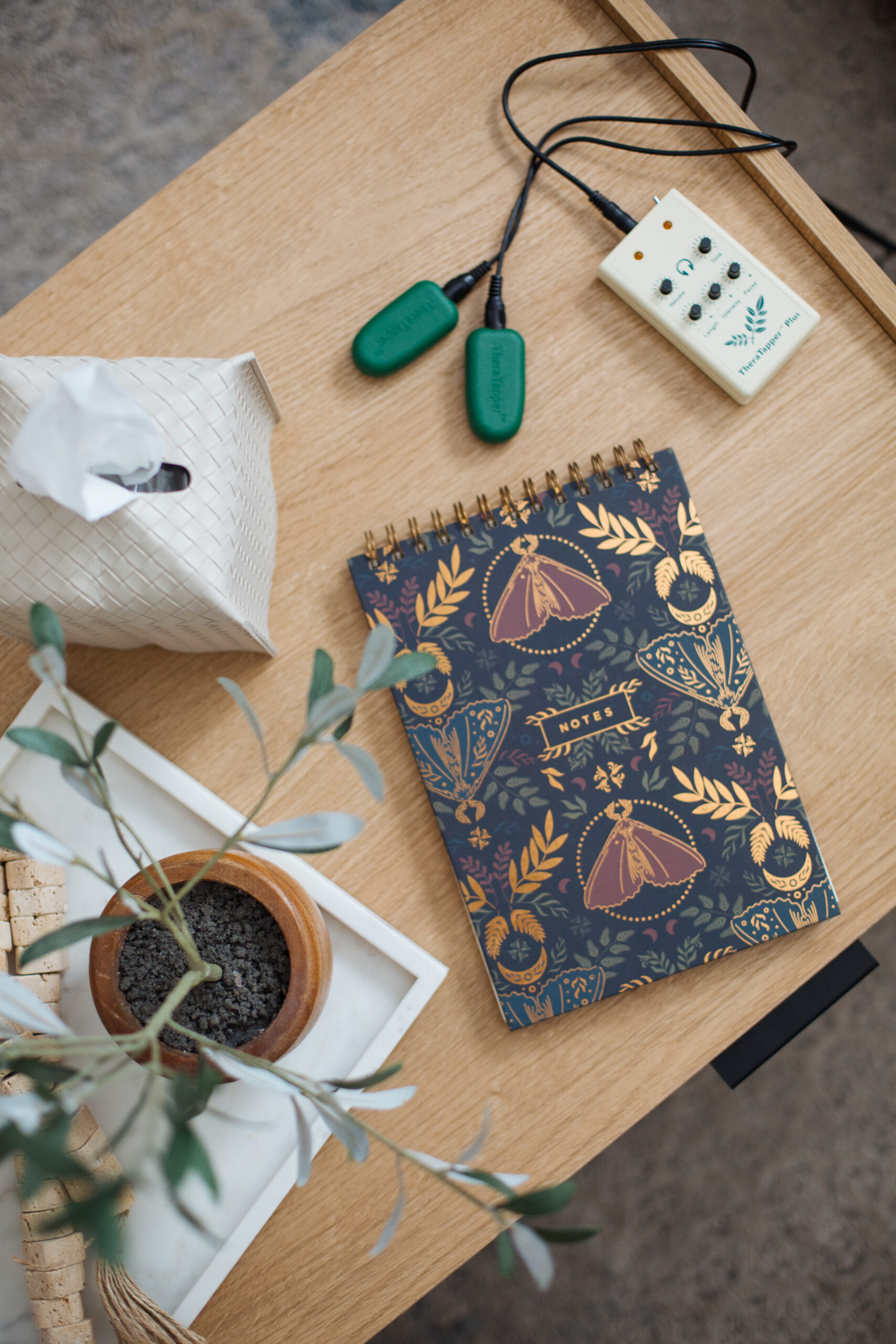
Also, where you experience a Ketamine dosing matters. You’re not getting hooked up to an IV in a sterile medical office and left alone. My office is cultivated with intentionality: designed to feel safe, warm, and connective. There is preparation before the experience and integration afterward. It’s rooted in ritual in the way we approach the work with respect and care. All of this plays a role in the therapeutic experience.
Ketamine can create access. Therapy — the relationship, the reflection, the integration — is what turns that access into healing.
Coaching Program
Outside the therapy room, I provide a coaching program for people ready to move from insight into action. We go through studying your own individual survival patterns, learning tools for impactful change, and implement more intentional ways of living. Coaching here isn’t about self-optimization or productivity culture; it’s about integration.
We work with nervous-system awareness and attachment context to help people make choices from clarity and safety rather than fear, urgency, or autopilot.
This 6-week program is designed to help you understand how your experiences shaped who you are, build safety from the inside out, and create change that is embodied, sustainable, and aligned with the life you want to live. All of this happens through a blend of individual deep dives and connective experiences within community.
Coaching is NOT therapy so this offering is completely separate from the therapy work I do at InnerWoven. If this resonates, sign up here to join my email list and find out more details about the next launch date.
Why Attachment Is One of the Foundations of My Work
Attachment isn’t about how much your parents loved you.
It’s about how safe your nervous system learned it was to have needs, feelings, and to rely on others.
That’s why attachment matters, not as a label, box, or identity, but as context.
Attachment, especially through a trauma-informed lens, helps explain why emotional patterns in adulthood can feel so difficult to shift, even when you understand them intellectually. It offers language for how early relationships shape adult relationships including emotional regulation, closeness, conflict, independence, and how support is experienced later in life.
Many adults know their patterns.
What they don’t always understand is why those patterns persist, or why change can feel destabilizing, sometimes even long after insight has happened.
When attachment awareness is paired with somatic recognition, it bridges that gap. This happens because the body carries it’s own story of the things it learned to survive, and has not yet learned that safety can look different now.
What You’ll Find on This Blog
Now that you know ALL about me and my approach, let’s talk about the blog! This blog isn’t meant to be linear or prescriptive.
Much of what’s shared here grows out of common themes that show up in clinical work, yet emerge differently for everyone. You’ll see posts on:
- attachment in adulthood
- emotional over-functioning
- emotional neglect
- nervous-system regulation
- relational dynamics
- life transitions and grief
- the often messy process of healing itself
At times, I’ll also share information about upcoming workshops, groups, or new ways to work together. Occasionally, I’ll write from a more reflective place, offering thoughts that aren’t designed to instruct, but simply share.
Some posts will feel grounding.
Some may feel unsettling.
Some may land later than expected.
That’s okay.
This space is less about answers and more about understanding; helping people locate themselves with more clarity, compassion, and choice.
To Wrap It Up
Much of what we struggle with as adults didn’t come from weakness or failure.
It came from adaptation: a whole human learning how to stay safe in the relationships and environments they were given.
This blog exists to name those patterns with care, offer context where there’s been confusion, and create space for something more honest to unfold over time.
I’m glad you’re here and on this ride with me. Let’s do this differently.


Get monthly insights and new resources
Join our email community for thoughtful monthly insights about attachment healing, nervous system regulation, and reconnecting with your authentic self.
No spam, no daily overwhelm, just quality content when we have something meaningful to share.